

Verizon, AT&T or T-Mobile: How to Pick the Right Plan in 2026

Verizon: The Premium Network Fighting for Value
Verizon built its reputation on having the most reliable nationwide network, and that reputation is largely still deserved, particularly in rural areas and suburban markets where its coverage advantage over T-Mobile is most visible. The tradeoff has always been price, and for years Verizon leaned into being the most expensive option without apology. That's changing. After appointing a new CEO, Dan Schulman admitted that Verizon had "relied too heavily on price increases" and set a new goal of creating the "best overall value proposition" in the industry. Whether that shift has fully landed is debatable, but the plan lineup is more competitive than it used to be. The Current Verizon Lineup Verizon currently offers three postpaid plans: Unlimited Ultimate, Unlimited Plus, and Unlimited Welcome. For a single line, those cost $85, $70, and $55 per month respectively. For four lines, pricing drops to $55, $40, and $25 per line per month.The entry point. You get unlimited talk, text, and data with Mexico and Canada coverage included. What you don't get is 5G Ultra Wideband access or any mobile hotspot data. At four lines it drops to $25 per line, which makes it genuinely competitive for families on a tight budget, but the network experience is noticeably lower tier than the plans above it. Worth considering only if price is the absolute priority.
The sweet spot in the Verizon lineup. You get 5G Ultra Wideband access, 30GB of mobile hotspot data, and 50% off a connected device plan like a smartwatch or tablet. The perks system lets you add streaming services like Disney Bundle or Netflix at a discounted $10 per month. For most people who want Verizon's best network without paying for features they won't use, this is the plan.
The top tier, recently updated to include Identity Secure and Verizon Family Plus. You get 200GB of hotspot data, international talk and text, and the broadest set of perks. This is the plan for frequent travellers or households that genuinely use everything included. For most domestic users, Unlimited Plus covers the same ground for $15 less.
AT&T: More Coverage, More Flexibility
AT&T quietly became a more interesting carrier in 2026. Its network now covers more of the US than any other carrier by landmass, and its plan structure has been genuinely simplified compared to the confusion of recent years. The March 2026 "Unlimited Your Way" relaunch gave it a cleaner lineup, and the May 2026 Build-A-Plan introduction added a genuinely flexible entry-level option. The Current AT&T Lineup AT&T's main unlimited plans are Value 2.0, Extra 2.0, Premium 2.0, and Elite 2.0. Every plan includes 5G access, AT&T ActiveArmor mobile security, and some hotspot data regardless of tier. Unlike Verizon, you don't need to reach the highest tier to access AT&T's best smartphone deals.AT&T's entry unlimited plan. You get 5GB of premium high-speed data before potential speed throttling during congestion, 3GB of hotspot data, and 5G access. It's a usable plan for light users but the 5GB premium data cap is a real limitation if you use your phone heavily. Multi-line discounts are meaningful here, with families able to get per-line costs well under $40.
The most popular AT&T plan and the one that hits the best value balance. You get 75GB of premium data before any potential throttling, which covers the vast majority of users comfortably, plus a solid hotspot allowance. This is where most single-line or small family customers should land on AT&T.
Truly unlimited premium data with no deprioritization threshold, 100GB of hotspot data, and 4K UHD streaming. The plan that makes sense for heavy data users, mobile workers, or anyone using their phone as a primary internet source. The international add-on (talk, text, and 20GB data in 210-plus destinations) is included in the Elite 2.0 tier above this.
T-Mobile: The Value Leader with the Best Perks
T-Mobile has spent the last decade trying to out-value Verizon and AT&T, and in 2026 it's largely succeeding. Its 5G network is the broadest in the country in terms of raw coverage, and its plan structure bundles more included features than either competitor at equivalent price points. The tradeoff is that T-Mobile's network can underperform in rural and deep suburban areas where Verizon still has the edge. The Current T-Mobile Lineup T-Mobile's main plans are now organised around two tiers: the Go5G family (existing structure) and the newer Experience plans. The Experience More plan includes all the benefits of Go5G Plus, adds more hotspot data, and includes T-Satellite with Starlink connectivity at $5 less per line. Experience Beyond includes all Go5G Next benefits plus unlimited hotspot data with 250GB of high-speed allocation, and more international data across 215 destinations.The bare-bones T-Mobile plan. You get unlimited talk, text, and data on T-Mobile's network, but you're lower-priority during congestion, video is capped at SD quality, and there's no included Netflix or streaming perks. A starting point for those switching to T-Mobile on a tight budget, but the mid-tier plans offer enough extra value that it's usually worth stepping up.
The most popular tier and where T-Mobile's value proposition really shows. Netflix Standard is included, Apple TV Plus is included, 4K streaming, 50GB of hotspot data, and upgrade-ready every two years. Families switching from AT&T or Verizon can save around 20% per month at this tier according to T-Mobile's own comparisons. This is the plan to benchmark against when comparing carriers.
The premium tier, and genuinely premium. Upgrade-ready every year, Netflix included, 250GB of high-speed hotspot data, unlimited international data in 15GB high-speed chunks across 215 destinations, and Starlink satellite connectivity via T-Satellite. T-Mobile claims this plan delivers over $200 in added value per line per month. For frequent travellers or tech-forward users who upgrade phones regularly, this is hard to beat.
Side-by-Side Comparison
Verizon wins in rural areas and suburban depth. AT&T wins on raw landmass coverage. T-Mobile wins on 5G breadth and urban density. If you live or travel frequently in rural areas, Verizon or AT&T. If you're primarily urban or suburban, T-Mobile's network is excellent.
T-Mobile wins on included features per dollar at mid and upper tiers. AT&T is competitive at the entry level with Build-A-Plan and Value 2.0. Verizon is the most expensive per line for comparable features, though its Simplicity Plan changes that for bring-your-own-device customers.
T-Mobile wins by a clear margin. Netflix and Apple TV Plus are included at the mid-tier. Verizon's perks system lets you add services at a discount but costs extra. AT&T's plans include fewer bundled streaming perks at equivalent price points.
T-Mobile wins for frequent international travellers with data included in 215 destinations. AT&T's Elite 2.0 includes 20GB in 210 destinations. Verizon charges daily TravelPass fees on lower tiers and includes international only on Ultimate.
T-Mobile wins on savings for families of three or more. Verizon's multi-line discounts are meaningful, particularly on Unlimited Welcome. AT&T's mix-and-match capability across the Unlimited Your Way lineup gives families flexibility that the others don't offer.
T-Mobile wins with its 5-year price guarantee on Experience plans. Both AT&T and Verizon raised prices on legacy plans in 2026. If locking in your rate matters to you, T-Mobile is the only carrier offering a formal guarantee.
So Which Carrier Should You Pick?
This is the question every comparison article dances around. Here's a direct answer based on actual use cases.You live or regularly travel in rural or less-densely covered areas where network reliability matters more than price. Or you're a bring-your-own-device customer who wants Verizon's network at a reasonable price through the new Simplicity Plan. Or you bundle home internet with Fios and want a single-provider discount. Verizon is not the value choice, but it is the reliability choice, and for some users that's the only choice that matters.
You want broad nationwide coverage with a simpler plan structure and more flexibility than either competitor. The Build-A-Plan option is genuinely interesting for budget-conscious users who don't need unlimited data every month. AT&T also leads on discounts for military, teachers, nurses, and first responders at 25% off, which can make it the clear winner if you qualify. The Extra 2.0 plan is a solid, no-nonsense unlimited option that holds its own against both competitors.
You want the most included features for the money, you're in an urban or suburban area where T-Mobile's network performs at its best, you travel internationally with any regularity, or you have a family of three or more lines where T-Mobile's savings compound significantly. The 5-year price guarantee adds real peace of mind in an industry that has a habit of raising rates on loyal customers. For most people doing a straight comparison on value, T-Mobile wins at the mid and upper tier.
Quick Reference
- Best network reliability, especially rural: Verizon
- Best value for families: T-Mobile Experience More (3+ lines)
- Best for bring-your-own-device on a budget: Verizon Simplicity ($30/line new customer) or AT&T Value 2.0 ($50/line)
- Best included streaming perks: T-Mobile (Netflix and Apple TV Plus included)
- Best for international travel: T-Mobile Experience Beyond
- Best for military, teachers, or medical workers: AT&T (25% off select plans)
- Best price stability: T-Mobile (5-year price guarantee on Experience plans)
- Most flexible for variable budgets: AT&T Build-A-Plan (from $15/mo)
- All prices are pre-tax; always verify current pricing at the carrier website before signing up
The Honest Caveat
No guide can tell you which carrier has the best signal in your specific neighbourhood, your office building, or the roads you drive every day. Before switching carriers, do two things. First, check coverage maps for your specific zip code on all three carrier websites. Second, ask people around you which carrier they use and whether they have issues. Anecdotal local evidence is often more useful than national network rankings. All three carriers offer some form of trial period or money-back guarantee for new customers. Use it. If T-Mobile has spotty coverage at your house, you'll know within a week, and you can return the SIM without being locked in. The best plan isn't the one with the most features. It's the one that works reliably in the places you actually are, at a price you're comfortable paying month after month. What carrier are you on right now and are you happy with it? Let us know in the comments.Samsung Galaxy S10e vs Apple iPhone XR

TECHNICAL SPECIFICATIONS
SIZE & HANDS-ON
The larger 6.1-inch display on the iPhone XR makes it slightly bigger than the Galaxy S10e with its 5.8-inch display. Samsung's budget flagship is also thinner and lighter. While some may prefer the larger display size, others may lean toward the smaller dimensions of the Galaxy S10e for easier one-handed use.
NOTCH VS. INFINITY-O
Samsung has introduces a screen cutout called "Infinity-O," essentially a hole punched into the display for the front camera. This allowed both Apple and Samsung to offer larger screen real-estate with slim bezels. Ideally, we hope that both the notch and the punch are interim steps on the path to actual full-display phones.
SCREEN RESOLUTION
The iPhone XR was criticized for its lower-resolution LCD display. Pure quality goes to Samsung, who outfitted the Galaxy S10e with a Full HD+ AMOLED panel and support for HDR10+ for superior picture quality.
STORAGE & EXPANSION
Samsung gives customers 128GB of storage on the base Galaxy S10e, compared to Apple's 64GB. Crucially, the Galaxy S10e also includes microSD storage expansion, which Apple's iPhones continue to lack.
HTC One M9 vs HTC One M8 - Video Comparison

Both the HTC One M8 and the One M9 would look nearly identical to most, with a few subtle yet logical differences which set the two apart. Specifically, its new scratch resistant finish doesn't make it as slippery to hold. Meanwhile, the dual-tone finish unexpectedly gives the M9 a slightly sharper feel in the hand – whereas the M8 has a seamless, rounded look around its sides. Additionally the power button on the One M9 has been relocated to the right side, making it more accessible.
For its display, HTC has retained the same 5 inch 1080p LCD 3 panel, without opting for a Quad HD resolution like most of their competitors. The display is still sharp, detailed and adequate for the device.
The HTC One M9 features a new powerful octa-core Qualcomm Snapdragon 810 chip with 3GB of RAM. The quad-core Snapdragon 801 processor with 2GB of RAM on the One M8 may be aging, but it is still capable enough to run everything thats placed in front of it smoothly. Both handsets have 32GB of based storage, which can be expanded through microSD when required.
The clearest differentiator is likely the new Sense 7.0 user interface, which replaces Sense 6.0 found on last year's model. Besides the usual BlinkFeed and various Motion Launch Gestures, HTC has also introduced downloadable themes. Additionally, the new HTC Sense Home widget gives hardened users a degree of organization, as apps within the widget will change accordingly based on your location and usage.
The UltraPixel camera makes a return on the HTC One M9, but has been relocated to the front of the device. The rear camera has been upgraded to a single 20MP unit which captures more detail. The camera is also capable of 4K video capture, while the One M8 is limited to 1080p.
However the One M9 has some annoying issues with battery life and low light cameras performance, which the company needs to take care of if they want their new flagship to be taken seriously.
The HTC One M9 clearly offers itself has an upgrade over the One M8, with more powerful hardware, a nicer design and an improved camera. Still the subtle changes may not be enough to convince an owner of last year's flagship to switch over, though the One M9 is a great choice for someone looking to purchase a new smartphone.
HTC One M9 vs. Apple iPhone 6 - Video Comparison

source - PhoneArena
Samsung Galaxy S6 Edge vs. Apple iPhone 6 Plus - Camera Comparison


Samsung was quick to compare the superiority of the cameras on their new flagships with Apple's top offerings. We have also seen photo samples of the Galaxy S6 and the Galaxy S6 Edge online. Now lets see how the Samsung Galaxy S6 Edge camera compares head to head against the Apple iPhone 6 Plus.
The test compares the 16MP camera on the newest Samsung flagship against the 8MP camera on Apple's top smartphone. The review looks at outdoor and low-lit scenes, but the full resolution images have not been provided for a detailed reference. A video capture sample has also been provided, showing the 4K UHD video sample from the Galaxy S6 Edge compared against the 1080p capturing from the iPhone 6 Plus.
Check out the photos and 1080p HD video sample captured by the iPhone 6 Plus camera
Next you can sample the photos along with the 4K UHD video captured by the Samsung Galaxy S6 Edge
source - Mobilsiden
Nokia Lumia 830 vs Nokia Lumia 925

When the Nokia Lumia 925 was first introduced, we witnessed a new direction in the company's smartphone design, stepping away from the full polycarbonate body with a more modern industrial design. The Nokia Lumia 830 is the newest member of the company's flagship family and shares many of its older siblings design traits. Lets take a closer look at how they compare.
 The Lumia 925 features a 4.5 inch display with a 768 by 1280 pixel resolution, an 8.7 megapixel PureView camera, 16GB of internal storage and a 1.5 GHz dual-core processor with 1GB of RAM.
The Lumia 830 is an upgrade in every way offering a 5.0 inch 720p HD display, 16GB with microSD storage expansion, a 10MP PureView camera with OIS, and a 1.2GHz quad-core Qualcomm Snapdragon 400 processor.
Even though the Lumia 830 offers newer hardware than the Lumia 925, the Nokia Lumia 930 was the Lumia 925's true successor. With the Lumia 830, Nokia has streamlined the design even further, with an even slimmer frame, and the inclusion of microSD.
On the other hand we really liked the soft edges of the Lumia 925 design compared to the sharper edges on the Lumia 830 and Lumia 930. It made the Lumia 925 easier to handle, while the Lumia 830 with its larger screen can become harder to handle with one hand.
 If you are a Lumia 925 user, you can't go wrong either way. Both the Lumia 930 and Lumia 830 are great choices. However the more powerful Snapdragon 800 CPU, full 1080p HD display and 20MP PureView camera are likely reasons to pick up the Lumia 930 instead of the slimmer and slightly better looking yet less powerful Lumia 830.
The Lumia 925 continues to be a great option for Windows Phone users, as the platform remains consistently fast despite its internal hardware. Unfortunately the device is not future proof, and new software updates continue to favor the newer hardware.
Unless you are willing to wait for the new wave of Windows 10 smartphones, you may find the Lumia 830 a worthy upgrade. Or you could consider spending the little extra and purchasing the more powerful Lumia 930 instead.

Nokia Lumia 830 vs Nokia Lumia 1020

The Nokia Lumia 1020 has a distinct design as a result of its massive 41MP PureView camera protruding from its back. Interestingly Nokia chose a similar design for its camera on the Nokia Lumia 830. But how does the new device compare to the veteran camera champ?
The Lumia 830 is pitched as an "affordable" flagship, and Nokia (and Microsoft) want to give attention to its 10MP Pureview camera with (OIS) Optical Image Stabilization.
Given that the Lumia 830 is is nearly two years younger than the 1020, and it reaps the benefits: a more powerful Snapdragon processor; integrated wireless charging; a larger display with smaller bezels; a removable battery; expandable memory; changeable back covers; a slimmer, more modern industrial design … the list goes on.
The smaller, leaner size of the Lumia 830 also makes it easier to pocket and hold. It even sits more comfortably on the table, while the camera on the Lumia 1020 doesn't allow you to place it comfortably.
But when you compare cameras, the 41MP sensor on the Lumia 1020, which includes digital oversampling and xenon flash, utterly dominates the 10MP camera on its younger sibling. Also, the so called "affordable" Lumia 830 is actually $100 costlier than the Lumia 1020.
Interestingly the camera app launches much faster on the Lumia 830, thanks to its quad-core processor. It even snaps photos at a much faster speed, despite having only half the RAM of its older sibling. This is also because the older Snapdragon S4 processor has to handle a much larger 41MP camera, while the quad-core Snapdragon 400 has only a 10MP camera to deal with. The Lumia 830 camera will perform even better with the updated Lumia Camera version 5, which is unfortunately not available for the older Lumia 1020.
Still the Lumia 830 does improve on the Lumia 1020 in certain aspects. For example its minimum focal range is 10cm compared to the 15cm on the Lumia 1020, allowing the newer device to get much closer to subjects. Nokia has also greatly improved the software, removing any tinting which shows up on the Lumia 1020.
| Lumia 830 | Lumia 1020 |
 |  high resolution |
 |  high resolution |
Interestingly, despite the jump from a dual-core to a quad-core processor, the Lumia 1020 and Lumia 830 perform almost in par, with the newer handset getting only a slight edge in day to day use. When it comes to games however, the four-core power does shine brighter.
At the end of the day, the Lumia 1020 may seem like the better choice with its 41MP PureView camera, Xenon Flash and digital zoom. However you should only pick it up if you are strictly looking for the better camera. The Lumia 830 on the other hand is always going to be the better purchase in every other way. In any case, we would recommend that users consider the more powerful Lumia 930 (Lumia Icon) or Lumia 1520 which offers even better cameras and hardware, and doesn't cost much more than the so called "affordable" flagship.
Google Nexus 6 vs Apple iPhone 6 Plus - Video Comparison

source - PhoneArena
Google Nexus 6 vs Samsung Galaxy Note 4 - Video Comparison

Motorola DROID Turbo vs Samsung Galaxy S5 - Video Comparison

Its important to note that the Galaxy Note 4 is a much newer device, so its hardware is a better match for the DROID Turbo. While the Galaxy S5 may have ruled over the Android landscape through most of 2014, its age is surely evident against some of the younger contenders.
Motorola has done a great job with the Droid Turbo – this phone is a terrific package that packs all the cutting-edge technology one can think of right now. What's more, its near stock Android experience focusses on the things that matter to smartphone users instead of adding bloat.
The Galaxy S5 though still powerful and capable, is simply overshadowed by the higher QHD resolution, larger battery and streamlined software experience the DROID Turbo offers. However the Galaxy S5 does offer the better camera between the two.
While Galaxy S5 owners don't necessarily need to consider upgrading to the DROID Turbo, Motorola's offering is a great choice for new customers, especially if you are comfortable with the DROID Turbo's Verizon exclusivity.
source - PhoneArena
Motorola DROID Turbo vs Samsung Galaxy Note 4 - Video Comparison

source - PhoneArena
Leaked Microsoft McLaren vs Apple iPhone 6

source - CNBeta (translated)
Ten reasons to buy the Galaxy Note 4 instead of the iPhone 6 Plus

With the Apple iPhone 6 Plus, the once small smartphone suddenly joined the phablet ranks, giving long time Apple fans an opportunity to compare their devices with large screened Android counterparts. But how does Apple's new iPhone stand up against well a established veteran like Samsung and its Galaxy Note 4? Here are ten reasons why Samsung's phablet is a better choice than the iPhone 6 Plus.
1 - Quad HD display
The iPhone 6 Plus has a 1080p, full HD display, which is the highest on an iPhone to date. While Samsung's display is 5.7 inches, the company has added a whopping 1440p Quad HD Super AMOLED display panel which gives the Galaxy Note 4 a 500ppi pixel density.2 - Good screen-to-phone-size ratio
Despite the Galaxy Note 4 having a 0.2" larger screen (diagonally), it is much shorter than the iPhone 6 Plus, returning a decent 74% screen-to-phone size ratio. This makes the Note 4 better suited for single handed use. Meanwhile the iPhone 6 Plus screen-to-phone-size is at 68%3 - S Pen Stylus
When Steve Jobs first announced the iPhone, it was clearly meant for single handed use. However Apple finally did away with this policy when they released the iPhone 6 Plus. While iOS has been optimized for the larger display, it doesn't compare to the feature rich productivity options offered by the coupling of the Note 4 and its S Pen stylus.You can use your S Pen for handwriting, sketching, annotating, clipping and navigating around the interface, brings one more input option to the table, and executed in the best manner that can be found so far on a mobile device at that.
4 - 4K Video Capture
While the iPhone has some fancy improvements in the camera department including the slo-mo video capture, it is only capable of video at 1080p. Samsung makes use of the powerful quad-core Snapdragon 805 processor in the Note 4 to capture very detailed 4K video accompanied by great sounding audio capture.5 - Stereo audio capture with three directional mics
The Galaxy Note 4 has been outfitted with three dedicated noise-canceling microphones, which can record directional sound, and do it in stereo, with the excellent 250+ kbps bit rate at that, making it the best Android device for audio recording. Meanwhile iPhone 6 Plus users have to settle for mono sound recording on their video footage.6 - Longer battery life with faster charging and swappable battery
The 3220 mAh battery on the Galaxy Note 4 is capable of lasting much longer than the 2915mAh battery on the iPhone 6 Plus. Samsung even includes an Ultra Power Saving Mode to allow you to squeeze even more out of your battery when you are running low.7 - The flexibility of Android over iOS
From the homescreens, through the multitasking options, to the camera app and even the settings menu - the Galaxy Note 4 is stuffed with tons of options, features and functionality. Features like Multi-window and Pop-up View, Photo Notes, and Smart Select are some of the added features the Note 4 offers their consumers.While we do admit Apple has come along way with iOS 8, which offers custom keyboard, widgets on the notification pane and more, it doesn't compare to the features (sometimes redundant) you will find on Samsung's phablet.
8 - Wide-angle front camera
The Galaxy Note 4 offers one of the best selfie cameras out there, with a 3.7 MP resolution, wide f/1.9 aperture, and up to 120 degree wide-angle mode to fit many friends in the frame. Apple upgraded the 1.2 MP iPhone 6 Plus FaceTime HD camera in comparison with last year's edition with a brand new sensor that captures more light, but its f/2.2 aperture and lack of wide-angle mode are no match for the front-facing snapper of the Note 4.9 - IR Blaster
With the Note 4, you can control your home electronics from afar, from TVs, through home stereos, and even air conditioning units, for the annoyance of everyone else in the family.10 - UV sensor and Heart rate monitor
The UV sensor and Heart rate monitor are two features that may not be widely used, but still add value to your Galaxy Note 4 purchase. Samsung has managed to cram just about every sensor they can into the Note 4 and we definitely don't think its users would be complaining about that.Samsung Galaxy Alpha vs. Apple iPhone 6 - Video Comparison


source - PhoneArena
Samsung Galaxy Note 4 vs. Nokia Lumia 1520 - Video Comparison


source - PhoneArena
Samsung Galaxy Note 4 vs Sony Xperia Z3 - Video Comparison

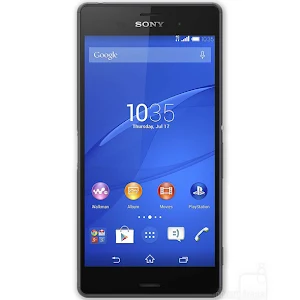
When it comes down to multitasking and functionality, the Note 4 clearly takes the lead, with its large ultra high-res display, the extra stylus input, and the split-screen functionality. If productivity is not what you are looking for, you will appreciate the record battery life, and the easier pocketability and one handed use of the Xperia Z3.
source - PhoneArena
Motorola Moto X 2014 vs Samsung Galaxy S5 - Video Comparison


source - PhoneArena
Apple iPhone 6 Plus vs. LG G3 - Video Comparison

Apple iPhone 6 vs. Samsung Galaxy S5 - Video Comparison

source - PhoneArena
Apple iPhone 6 vs. HTC One M8 - Video Comparison

When you pick up an iPhone, you generally get your money's worth due to the beautifully crafted handset. HTC has followed the same formula for their One M8 and the result is impressive. But the iPhone 6 is definitely the more compact one with its slim and lightweight construction. The M8 might be larger and heavier, but its offers a bigger screen with higher resolution and a pair of great front-facing speakers.
Taking the potent hardware specs of these phones into account, it is safe to say that both the HTC One (M8) and the iPhone 6 will be relevant for at least a couple more years. The two are definitely capable of handling their respective operating systems with ease, delivering a hassle-free user experience.
In terms of cameras, both have unique offering. Though the 8MP camera on the iPhone 6 may produce better results than the 4MP UltraPixel Duo camera setup on the One M8. If you take a lot of selfies, however, the 5MP front-facing camera on the One M8 should produce better results.